Keynote Speech Ⅰ
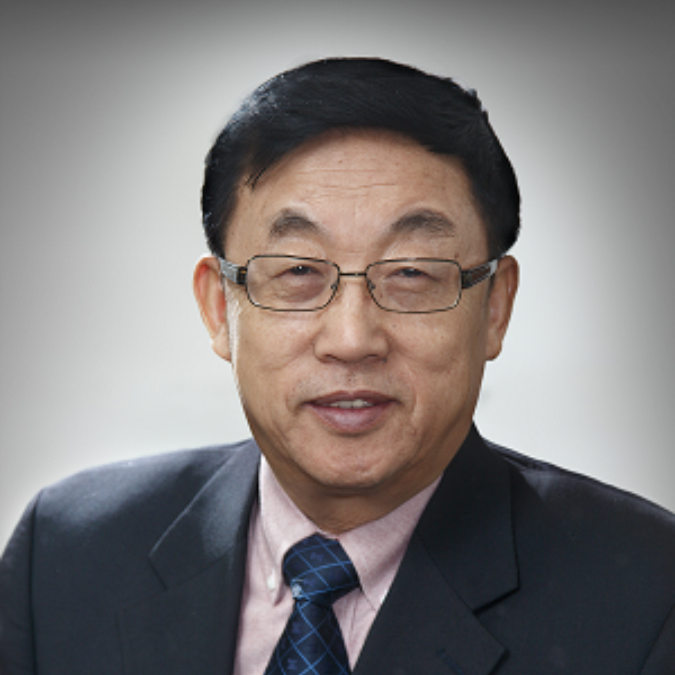
Prof. Tianyou Chai
Member of the Chinese Academy of Engineering
Fellow of IEEE and IFAC
Northeastern University, China
Brief Introduction: Tianyou Chai received the Ph.D. degree in control theory and engineering in 1985 from Northeastern University, Shenyang, China, where he became a Professor in 1988. He is the founder and Director of the Center of Automation, which became a National Engineering and Technology Research Center and a State Key Laboratory. He is a member of Chinese Academy of Engineering, IFAC Fellow and IEEE Fellow. He has served as director of Department of Information Science of National Natural Science Foundation of China from 2010 to 2018. His current research interests include modeling, control, optimization and integrated automation and intelligence of complex industrial processes.
He has published 356 peer reviewed international journal papers. His paper titled Hybrid intelligent control for optimal operation of shaft furnace roasting process was selected as one of three best papers for the Control Engineering Practice Paper Prize for 2011-2013. He has developed control technologies with applications to various industrial processes. For his contributions, he has won 5 prestigious awards of National Natural Science, National Science and Technology Progress and National Technological Innovation, the 2007 Industry Award for Excellence in Transitional Control Research from IEEE Multiple-conference on Systems and Control, and the 2017 Wook Hyun Kwon Education Award from Asian Control Association.
Speech Title: TBD
Abstract: TBD
Keynote Speech Ⅱ
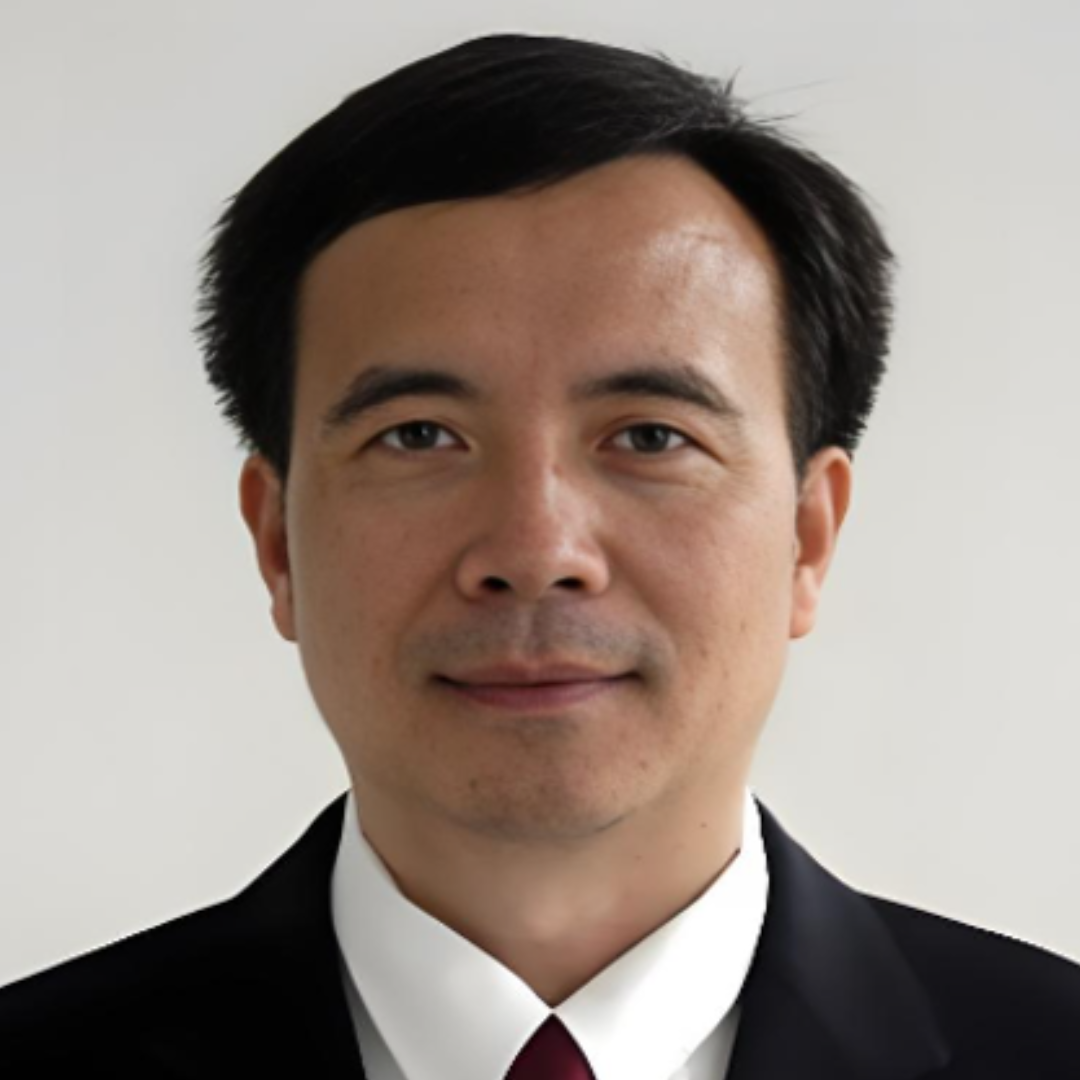
Prof. Lihua Xie
Fellow of IEEE, SAEng, IFAC and CAA
Nanyang Technological University, Singapore
Brief Introduction: Lihua Xie received the B.E. and M.E. degrees in electrical engineering from Nanjing University of Science and Technology in 1983 and 1986, respectively, and the Ph.D. degree in electrical engineering from the University of Newcastle, Australia, in 1992. Since 1992, he has been with the School of Electrical and Electronic Engineering, Nanyang Technological University (NTU), Singapore, where he is currently Professor and Director of 25M dollars National Research Foundation Medium Sized Centre for Advanced Robotics Technology Innovation (CARTIN) and Co-Director, Delta-NTU Corporate Laboratory for Cyber-Physical Systems which received $45M funding from National Research Foundation of Singapore, Delta Electronics and NTU, and has over 100 researchers including 20 professors, 51 research staff and 30 PhD students. He served as the Head of Division of Control and Instrumentation from July 2011 to June 2014 and the Director, Center for E-City from July 2011 to June 2013. He held teaching appointments in the Department of Automatic Control, Nanjing University of Science and Technology from 1986 to 1989.
Dr. Xie’s research interests include robust control, networked control systems, multi-agent networks, indoor positioning, human activity recognition and unmanned systems. He has published 9 books, over 500 journal papers, 380 conference papers, and 20 patents/Technical Disclosures. He has been listed as a highly cited researcher (SCI: 27400, H-index: 79; Google Scholar: 44,600, H-index: 103) by Thomson Routers and Clarivate Analytics annually since 2014. He has secured a total research grant of over 90 million Singapore dollars as programme and project PI, and graduated 38 PhD students. He has received many awards for his research including IBM Faculty Award, Changjiang Scholar Award from Ministry of Education of China, and best paper awards at 8 international conferences such as the Guan Zhao Zhi Award from the 29th and 39th Chinese Control Conference (CCC) both of which had over 2000 participants, 7th Asia Control Conference (ASCC), 18th International Conference on Advanced Robotics (ICAR 2017), etc.
Dr. Xie is an Editor-in-Chief for Unmanned Systems and an Associate Editor for Sciences China – Information Science. He has served as an editor of IET Book Series in Control and an Associate Editor of a number of journals including IEEE Transactions on Automatic Control, Automatica, IEEE Transactions on Control Systems Technology, IEEE Transactions on Network Control Systems, IEEE Transactions on Circuits and Systems-II, Automatica Sinca, etc. He was an appointed member of Board of Governors, IEEE Control System Society in 2011 and an elected member of the Board (Jan 2016-Dec 2018). Dr Xie is a Fellow of Academy of Engineering Singapore, Fellow of IEEE, Fellow of IFAC, and Fellow of Chinese Automation Association. He was an IEEE Distinguished Lecturer from 2011 to 2014. He is a Vice-President, Control Theory and Application Committee, the Chinese Automation Association.
He served as the General Chair of the 7th, 13th and 15th IEEE Int. Conference on Control and Automation (ICCA 2009, ICCA 2017, ICCA2019); Vice Program Chair of the 55th IEEE Conference on Decision and Control (CDC 2015); General Co-Chair of the 9th World Congress on Intelligent Control and Automation (WCICA 2012); General Chair of the 9th International Conference on Control, Automation, Robotics and Vision (ICARCV’06); General Chair of 2002 International Conference on Control and Automation (ICCA 2002); Program Chair of the Fourth International Conference on Control and Automation (ICCA’03) and the 8th International Conference on Control, Automation, Robotics and Vision (ICARCV’04); General Chair of the 9th International Conference on Control, Automation, Robotics and Vision (ICARCV’06). He is the General Chair of the 62nd IEEE Conference on Decision and Control (CDC 2023).
Speech Title: TBD
Abstract: TBD
Keynote Speech Ⅲ

Prof. Long Wang
Winner of National Science Fund for Distinguished Young Scholars
Peking University, China
Brief Introduction: Long Wang was born in Xi'an, China. He received the bachelor's degree in automatic control from Tsinghua University in 1986, and Ph.D. degree in Dynamics and Control from Peking University in 1992. He has held research positions at the University of Toronto, Canada (1993, with Professor Bruce A. Francis), and the German Aerospace Center, Munich, Germany (1995-1997, with Professor Juergen E. Ackermann). He is currently the Cheung-Kong Chair Professor of Dynamics and Control, and the Director of Center for Systems and Control of Peking University. His research interests include complex networked systems, evolutionary game dynamics, artificial intelligence, and bio-mimetic robotics. Prof. Wang was the recipient of the National Science Prize (twice in 1999 and 2017), Guan Zhaozhi Control Theory Award, Zhang Siying Award in Decision and Control, and the Best Paper Awards for journal publications in Control Theory and Applications, Science China Information Sciences, etc. He has supervised more than 50 Ph.D. students. He has also given a number of plenary lectures at major conferences, including Chinese Control Conference, Chinese Conference on Systems Science, Chinese Conference on Intelligent Automation, etc. Email: longwang@pku.edu.cn
Speech Title: Evolutionary Game-theoretic Approach to Collective Intelligence
Abstract: Collective intelligence arises from local interactions and adaptive behavioral updates among individuals, manifesting as an emergent cognitive capability derived from distributed behaviors. Evolutionary game theory provides a unified analytical framework for characterizing the transition from microscopic decision-making to macroscopic order. This talk first introduces the fundamental concepts of game theory, highlighting the limitations of the full rationality assumption and presenting the evolutionary perspective under bounded rationality. We then discuss replicator equations and evolutionary dynamics in structured populations. Building on this foundation, this talk surveys two representative lines of research that employ evolutionary game theory to study collective intelligence. The first focuses on constructing models of collective estimation tasks to characterize how such intelligence emerges. The second emphasizes incentive design, exploring how adjustments to payoff structures can effectively enhance group performance in prediction tasks. Finally, the talk will summarize the advantages of evolutionary game theory in integrating microscopic behavior with macroscopic outcomes and outline directions for future research.
Keynote Speech Ⅳ
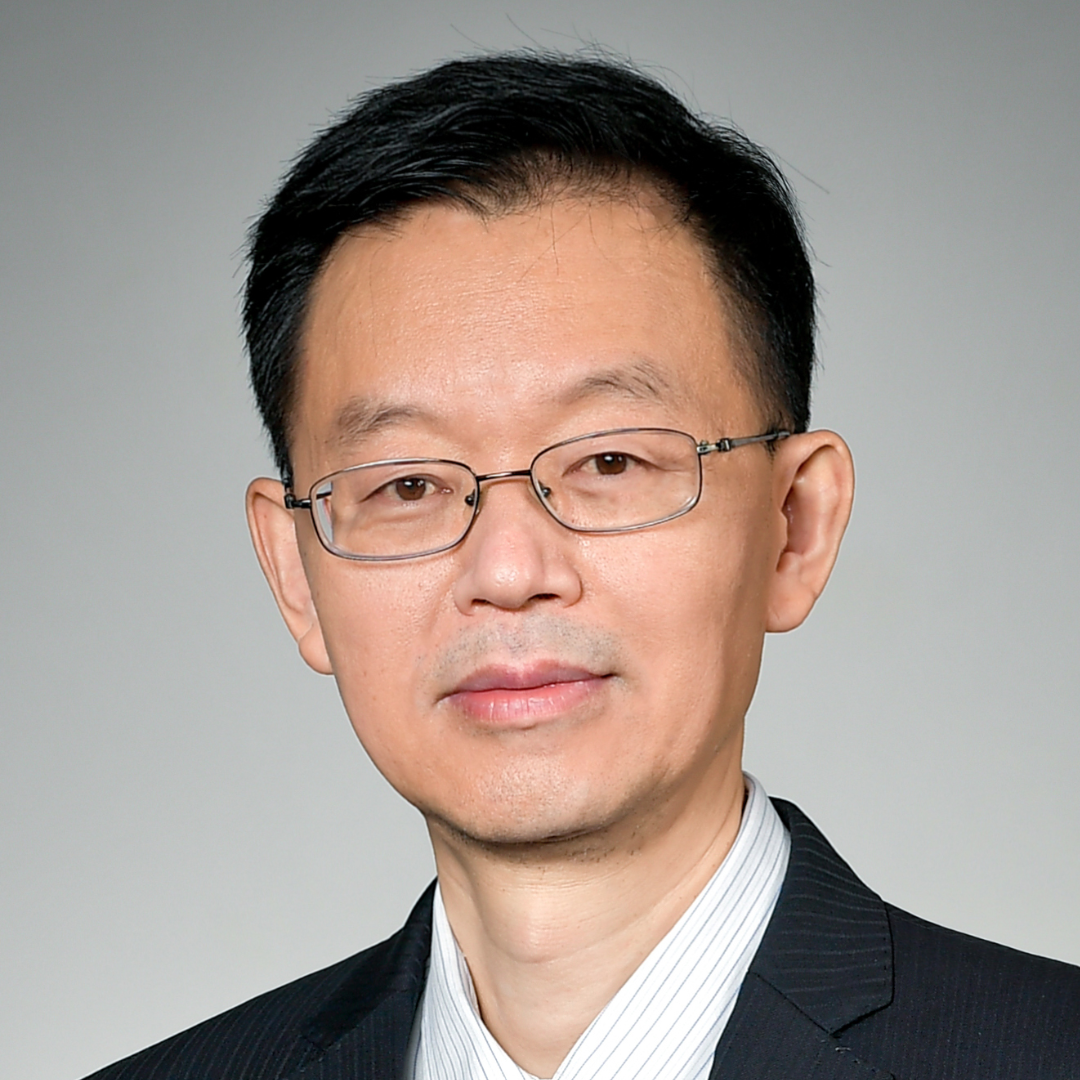
Prof. Xinping Guan
Winner of National Science Fund for Distinguished Young Scholars
Fellow of IEEE
Shanghai Jiao Tong University, China
Brief Introduction: Xinping Guan is a Chair Professor at the School of Automation and Sensing, Shanghai Jiao Tong University, and Deputy Director of the National Key Laboratory of Undersea Science and Engineering. He is an IEEE Fellow, a recipient of the Chang Jiang Scholars Program Distinguished Professorship awarded by the Ministry of Education of China, a National Science Fund for Distinguished Young Scholars awardee, and a member of the National “New Century Talents Project.” With nearly 30 years of research experience in network systems theory and applications, Prof. Guan has made pioneering and systematic contributions to the fundamental theories and methodologies of distributed sensing and cooperative control for networked systems. He proposed and established key theoretical frameworks for the integrated design of sensing, communication, and control systems, advancing the development of intelligent networked systems. His research achievements have received numerous prestigious awards, including two National Natural Science Awards of China (ranked first and second), the IEEE TCCPS Industrial Technical Excellence Award, two First Prizes of the Natural Science Awards from the Ministry of Education of China, and two First Prizes of the Shanghai Science and Technology Invention Awards. He has also received the IEEE Transactions on Fuzzy Systems Outstanding Paper Award and more than 10 Best Paper Awards at international conferences. Prof. Guan has published over 400 papers in leading journals and conferences, including 298 papers in IEEE Transactions journals and Automatica, as well as more than 50 papers in major Chinese academic journals. His publications have received over 31,000 citations on Google Scholar. He is the author of five academic monographs, holds more than 130 granted invention patents, and has led his team in developing six international standards. He has been recognized as an Elsevier Highly Cited Researcher for multiple consecutive years. Prof. Guan serves as an Executive Council Member of the Chinese Association of Automation, Deputy Chair of its Control Theory Technical Committee, President of the Shanghai Association of Automation, and has served as Deputy Secretary-General of the Ministry of Education’s Science and Technology Committee. He has also served on the editorial boards of eight international and Chinese journals, including IEEE Transactions on Systems, Man, and Cybernetics: Systems and IEEE/CAA Journal of Automatica Sinica.
Speech Title: A New Industrial Internet Architecture for Controllable End-to-End Performance in Multiple Scenarios
Abstract: As a landmark achievement in China's high-end manufacturing sector, domestic large passenger aircraft have in recent years steadily stepped onto the global competitive stage. Aircraft final assembly stands as the core link in the manufacturing workflow, involving the fitting of thousands of precision components, stringent process specifications, and ultra-high safety standards. It imposes exacting requirements on manufacturing accuracy as well as the real-time performance and reliability of information transmission. Against this backdrop, there is an urgent need to develop an efficient and stable shop-floor industrial Internet architecture. Such an architecture can strengthen the core supporting capacity of factory-wide networks and drive the innovation and upgrading of industrial Internet technologies. Nevertheless, aircraft final assembly currently faces three prominent bottlenecks that hinder intelligent manufacturing and collaborative optimization across production lines: difficulties in distributed full-factor perception, challenges in regulating end-to-end interactive performance, and barriers to coordinated control subject to multi-process constraints. This presentation first elaborates on the inherent complexity of aircraft final assembly scenarios and their critical demands for network support, highlighting the limitations of existing industrial network architectures. Second, focusing on a shop-floor industrial Internet architecture with controllable end-to-end performance, the speaker will illustrate an integrated design framework encompassing perception, transmission, computation and control, and review advances in its core enabling technologies. Special emphasis will be placed on the development of the world’s first capacity model for networked control systems, alongside a systematic comprehensive evaluation system built upon this model. Finally, the speaker will present practical deployment cases of the proposed architecture on the 5G-TSN industrial Internet platform at the Digital Zero Workshop of Shanghai Aircraft Manufacturing Co., Ltd., demonstrate results from multi-scenario performance simulation and verification, and discuss prospects for further applications in smart manufacturing and aeronautic assembly.