Invited Speaker Ⅰ

Zongyang Lv
University of Victoria, Canada
Brief Introduction: Zongyang Lv received the M.S. degree in mechanical engineering and the Ph.D. degree in control theory and control engineering from the Dalian University of Technology, Dalian, China, in 2015 and 2021, respectively. From 2015 to 2016, he joined Huawei Technologies Company Ltd., Shenzhen, China. From 2022 to 2023, he was a postdoctoral researcher with the Dalian University of Technology, Dalian, China. From 2023 to 2025, he was a postdoctoral researcher with the Department of Electrical and Computer Engineering, University of Alberta, Edmonton, Canada. He is currently a postdoctoral researcher with the Department of Mechanical Engineering, University of Victoria, Victoria, Canada. He is the winner of the Best Paper Prize Award of IFAC Control Engineering Practice (2023). His research interests include nonlinear control, fixed-time control, and aerial vehicle control.
Speech Title: Modeling and Control for UAV with Off-center Pendulum: A Generalized Offset Framework
Abstract: TBD
Invited Speaker Ⅱ

Mingjie Dong
Beijing University of Technology, China
Brief Introduction: Mr. Mingjie Dong is an IEEE Senior Member, primarily engaged in research on rehabilitation robotics and assistive exoskeletons. He has led multiple projects, including the Young Scientists Program of the National Key R&D Program and the National Natural Science Foundation of China. He has published over 30 SCI-indexed papers as the first or corresponding author in academic journals such as IEEE TRO, TMECH, TIE, TNSRE. He has received several scientific research awards, including the Second Prize of the 2024 Guangdong Provincial Technological Invention Award (ranked 2nd), the JMST Best Paper Award 2021, and the i-CREATe 2024 Best Conference Paper Award.
Speech Title: Interactive Control of Ankle Rehabilitation Robot
Abstract: TBD
Invited Speaker Ⅲ

Ke Chen
Zhengzhou University, China
Brief Introduction: Chen Ke is a Professor and Doctoral Supervisor at Zhengzhou University. His long-term research interests include complex data information mining, evolutionary feature selection, evolutionary transfer optimization, multi-objective optimization, and intelligent fault diagnosis. He has achieved a series of research outcomes. In recent years, he has published more than 50 papers in high-level academic journals and conferences, including IEEE TEVC, IEEE TCYB, and IEEE TSMC, with 4 selected as ESI Highly Cited Papers. He has applied for 21 invention patents, 11 of which have been granted. He serves as an expert reviewer of academic dissertations for the Ministry of Education, an expert reviewer of science and technology projects for Henan Province, and a member of the Intelligent Simulation Optimization and Scheduling Professional Committee of the China Simulation Federation, among other positions. He also serves as an invited reviewer for more than 20 high-level journals and conferences, including IEEE TEVC, IEEE TCYB, IEEE TSMC, and IEEE TAI. He has been selected for the Henan Provincial High-level Talent Program, the Zhongyuan Young Postdoctoral Innovative Talent Program, the Zhongyuan Young Top-notch Talent Program, and the Young Talent Sponsorship Program of the Henan Association for Science and Technology. He has served as Principal Investigator for seven national and provincial/ministerial-level projects, including the General Program and the Young Scientists Fund of the National Natural Science Foundation of China and the Special Fund of the China Postdoctoral Science Foundation. He has received the First Prize in the Science and Technology Academic Paper Category from the Henan Provincial Department of Education twice, the Nomination Award for Outstanding Doctoral Dissertation from the Chinese Association of Automation, the Best Creativity Award in the Henan Postdoctoral Innovation and Entrepreneurship Competition, and the title of Advanced Individual in the “Three-Education” Program at Zhengzhou University. He serves as Associate Editor of Computers & Electrical Engineering, a Young Editorial Board Member of Intelligent Marine Technology and Systems, Journal of Intelligent Science, and Biomimetic Intelligence and Robotics, and an expert member of the Young Advisory Group of Information and Control. He has been consecutively listed among the world’s top 2% scientists for 2025 and 2026.
Speech Title: Research on Key Technologies for Intelligent Fault Diagnosis of Rotating Machinery under Complex Operating Conditions
Abstract: Rotating machinery is widely used in energy, manufacturing, transportation, and other fields, and constitutes a core component of industrial equipment. In actual operation, it often faces complex operating conditions such as strong interference, variable working conditions, severe noise, and multi-fault coupling, which cause vibration signals to be non-stationary and nonlinear, with weak fault features. Traditional diagnostic methods rely on manual experience and shallow features, and are insufficient in generalization ability and real-time performance, making it difficult to meet the demands of precise operation and maintenance. Therefore, studying key technologies for intelligent fault diagnosis of rotating machinery under complex operating conditions and making breakthroughs in challenges such as adaptive feature extraction, transfer learning, and multi-objective optimization has important theoretical significance and engineering application value for improving equipment operational reliability, reducing maintenance costs, ensuring safe production, and promoting the development of intelligent manufacturing and predictive maintenance. This report will address the difficulties in information representation, information fusion, and reliable generalization in the design of intelligent fault diagnosis methods for rotating machinery under complex operating conditions, and will focus on research work in information enhancement and optimization, multi-source collaborative fusion, and generalization and knowledge enhancement.
Invited Speaker Ⅳ

Shuhong Yang
Guizhou University of Commerce, China
Brief Introduction: Yang Shuhong graduated from Lanzhou Jiaotong University in 2006 with a Master of Engineering degree in Computer Application. He earned his Doctor of Engineering degree in Computer Science and Technology from Chongqing University in 2014. From 2015 to 2016, he worked as a visiting scholar at the University of Waterloo, Canada. He is currently a Professor at Guizhou University of Commerce. He has published approximately 20 papers in major journals and conferences in his research field, with over 1000 Google Scholar citations. His main research interests include traffic modeling and simulation, traffic data mining, and other related areas.
Speech Title: Phase transition in heterogeneous traffic streams integrating current optimal flux difference under human-driven and connected autonomous vehicles scenario
Abstract: TBD
Invited Speaker Ⅴ
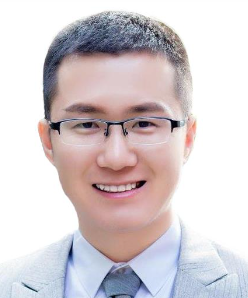
Jiyu Cheng
Shandong University, China
Brief Introduction: Jiyu Cheng received the B.E. degree in automation from Shandong University, Jinan,China, in 2015, and the Ph.D. degree in electronic engineering from The Chinese University of Hong Kong, Hong Kong, in 2019. He is currently an Associate Professor with the School of Control Science and Engineering, Shandong University, Jinan, China. His research interests include robot perception and robotic autonomous control.
Speech Title: Skill-Aware Diffusion for Generalizable Robotic Manipulation
Abstract: TBD
Invited Speaker Ⅵ
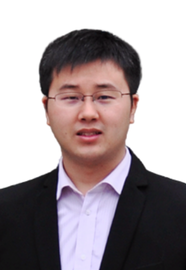
Jianwen Huo
Southwest University of Science and Technology, China
Brief Introduction: Huo Jianwen, from Ziyang City, Sichuan Province, born in 1988, PhD, Distinguished Professor at Southwest University of Science and Technology. His research direction is the motion planning and collaborative control of multi-unmanned systems. He has published more than 30 SCI/EI indexed papers as the first author or corresponding author in journals such as Robotica, Journal of Intelligent & Robotic Systems, and International Journal of Intelligent Unmanned Systems. He has been authorized with 10 Chinese invention patents, published one translated book. He has presided over 8 national projects such as the National Natural Science Foundation, Sichuan Natural Science Foundation, and Science and Technology Support, and won the second prize of Heilongjiang Province Technology Invention Award (ranked second).
Speech Title: Modeling and Robust Control of Aerial Manipulators under Dynamic Coupling and External Disturbances
Abstract: TBD
Invited Speaker Ⅶ
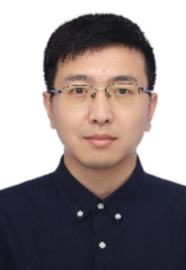
Xiuhui Peng
Nanjing University of Aeronautics and Astronautics, China
Brief Introduction: Peng Xiuhui received his Ph.D. from Peking University and is an Associate Professor and Master’s Supervisor at the College of Automation Engineering, Nanjing University of Aeronautics and Astronautics (NUAA). He has been selected for the Young Elite Scientists Sponsorship Program by the China Association for Science and Technology (CAST) and the Macao Young Scholars Program. As Principal Investigator, he has led more than 20 research projects supported by the 173 Basic Research Enhancement Program, the National Natural Science Foundation of China, national defense laboratories, the Aeronautical Science Foundation, the Natural Science Foundation of Jiangsu Province, the China Postdoctoral Science Foundation, and the Aviation Industry Corporation of China (AVIC). He has published more than 60 academic papers, including 31 as first or corresponding author in leading SCI-indexed journals in control and automation. His distinctions include the 2026 Natural Science Award of the China Simulation Federation (Second Prize, ranked first), the 2024 Natural Science Award of the Chinese Association of Automation (Third Prize, ranked first), the 2025 IEEE International Conference on Unmanned Systems Best Paper Award (ranked first), and recognition as one of the Asian Journal of Control’s 2024 Outstanding Reviewers. He has filed or been granted more than 20 invention patents and supervised students who have received awards for outstanding master’s theses and undergraduate graduation designs.
Speech Title: Task Planning and Formation Control for Distributed Coordination in Unmanned Systems
Abstract: Autonomous unmanned systems are becoming an important component of future intelligent operations, particularly in complex air-ground, maritime, and battlefield environments. As missions become more dynamic and heterogeneous, multiple unmanned platforms must coordinate their sensing, decision-making, task execution, and motion without relying on a continuously available central controller. Centralized schemes can provide globally consistent decisions, but they are vulnerable to communication interruptions, central-node failures, scalability limitations, and single-point failures. Distributed coordination offers greater resilience and flexibility, yet introduces fundamental challenges: agents may possess incomplete or asymmetric information; task assignments may conflict under temporal, sequential, and cooperative constraints; newly emerging tasks and changing resources can invalidate existing plans; and communication links may be disrupted as platforms move. Formation control presents complementary difficulties. Individual vehicles may be subject to nonholonomic or underactuated dynamics, while GPS-denied environments and member failures make it difficult to preserve formation geometry, mission roles, and forward motion using only local information. This report focuses on these unresolved issues in distributed task planning and formation control for unmanned systems. It discusses the underlying coordination requirements, associated scientific and engineering challenges, and representative application scenarios.
Invited Speaker Ⅷ
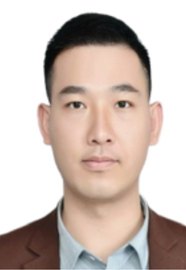 Chuan Tian
Chongqing Polytechnic University of Electronic Technology, China
Brief Introduction: Dr. Chuan Tian is an associate professor at Chongqing Polytechnic University of Electronic Technology. He received his Ph.D. from Chongqing University in 2011. His research interests focus on traffic flow modeling and simulation. Together with his co-authors, he has published more than ten academic papers in journals including Chaos, Solitons & Fractals, Nonlinear Dynamics, Physica A, Communications in Nonlinear Science and Numerical Simulation, Chinese Physics B, and Acta Physica Sinica. He has also authored an academic monograph published by Science Press. He has served as principal investigator for one General Program project funded by the China Postdoctoral Science Foundation and two provincial- or ministerial-level research projects. He also serves as a reviewer for several international journals and academic conferences.
Speech Title: Development of a Task-Difficulty-Driven Full Velocity Difference Model and Its Stability Analysis
Abstract: TBD
Invited Speaker Ⅸ
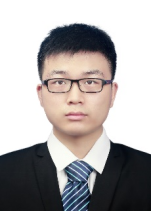 Xiao Liang
Nankai University, China
Brief Introduction: Xiao Liang is currently a Professor at College of Artificial Intelligence, Nankai University. He received his Ph.D. in Control Science and Engineering from at Nankai University in 2018. His research primarily focuses on intelligent control and perception for unmanned systems. Dr. Liang was selected for the Tianjin Young Talent Support Program and won the First Prize in the Tianjin Intellectual Property Innovation & Entrepreneurship Invention and Design Competition. He has led multiple research projects, including: National Natural Science Foundation of China (NSFC) General & Youth Programs, Sub-task of National Key R & D Programs. He has published over 20 academic papers in journals including IEEE Transactions.
Speech Title: Intelligent Control of Operational Unmanned Aerial Vehicles
Abstract: TBD
Invited Speaker X
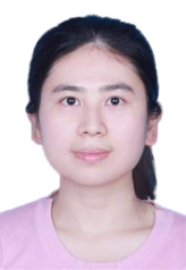 Xiushan Jiang
China University of Petroleum (East China), China
Brief Introduction: Xiushan Jiang received the M.S. degree from the China University of Petroleum (East China), Qingdao, China, in 2017, and the Ph.D. degree from the South China University of Technology, Guangzhou, China, in 2020. She is currently an Associate Professor with the College of New Energy, China University of Petroleum (East China). Her current research interests include reinforcement learning for dynamic control, multiobjective optimization and control of stochastic systems.
Speech Title: Learning-based primal-dual optimal control of discrete-time stochastic systems with multiplicative noise
Abstract: Reinforcement learning (RL) is an effective approach for solving optimal control problems without knowing the exact information of the system model. However, the classical Q-learning method, a model-free RL algorithm, has its limitations, such as lack of strict theoretical analysis and the need for artificial disturbances during implementation. This paper explores the partially model-free stochastic linear quadratic regular (SLQR) problem for a system with multiplicative noise from the primal-dual perspective to address these challenges. This approach lays a strong theoretical foundation for understanding the intrinsic mechanisms of classical RL algorithms. We reformulate the SLQR into a non-convex primal-dual optimization problem and derive a strong duality result, which enables us to provide model-based and model-free algorithms for SLQR optimal policy design based on the Karush-Kuhn-Tucker (KKT) conditions. An illustrative example demonstrates the proposed model-free algorithm’s validity, showcasing the central nervous system’s learning mechanism in human arm movement.
Invited Speaker XI
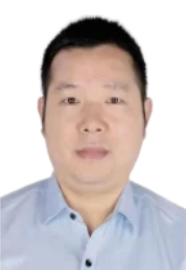 Yonghua Liu
Guangdong University of Technology, China
Brief Introduction: Yong-Hua Liu is currently an Associate Professor at the School of Automation, Guangdong University of Technology (GDUT), Guangzhou, China. His research interests include nonlinear control, with recent work focusing on legged/wheeled-legged robots, multimodal wheelchair manipulators, firefighting robots, and intelligent inspection technologies. He has led research projects including the Guangdong Provincial Key Area R&D Program, the National Natural Science Foundation of China, and the Guangdong Natural Science Foundation. He serves as a reviewer for leading journals such as IEEE Transactions on Automatic Control, Automatica, IEEE Transactions on Cybernetics, and IEEE Transactions on Neural Networks and Learning Systems, and has published more than 50 SCI/EI-indexed papers in these and other authoritative journals.
Speech Title: Funnel Control for Uncertain Nonlinear Systems Under Soft and Hard Output Constraints
Abstract: This report investigates the tracking control problem for a class of uncertain nonlinear systems subject to simultaneous soft and hard output constraints. The safety-related output constraints are modeled as inviolable hard constraints, while the desired tracking performance is characterized by adjustable soft constraints. To address potential conflicts between soft and hard constraints, a smooth transition function is introduced, based on which convex combination operators are constructed to directly modify the soft constraint boundaries, thereby ensuring their compatibility with the hard constraints. On this basis, the hard constraints and the modified soft constraints are consolidated to construct a constraint structure with smooth boundaries. Based on this consolidated constraint structure and combined with funnel control techniques, a low-complexity robust control algorithm is proposed to ensure the simultaneous satisfaction of the hard constraints and the modified soft constraints. Unlike existing methods that rely on auxiliary dynamic systems to indirectly adjust soft constraints, the proposed strategy eliminates the need for extra dynamic systems, resulting in a structurally simple and easy-to-implement static controller. Furthermore, when conflicts between soft and hard constraints occur, the proposed method ensures that the soft-constraint violation remains within a prescribed tolerance above the minimum violation necessary to satisfy the hard constraints, and achieves constraint decoupling within a finite time, thereby prioritizing the strict satisfaction of hard constraints. Simulation results verify the effectiveness of the proposed method.